

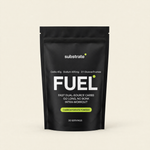
Intra-Session Endurance Fuel
Fast, dual-source carbohydrate fuel for anything over an hour — sip it during, go long without bonking. Just carbs and sodium. No BCAA filler.
Most “fuels” are half carbs, half filler.
The thing that actually fuels a long effort is carbohydrate — and most products under-dose it, pad it with BCAAs, and use a single carb source your gut caps out on. Fuel is just the carbs your muscles burn, in the ratio your gut absorbs fastest, plus the sodium you sweat out. Nothing else.
Two things that matter. Both dosed to work.
Two carbs. Two pathways. More fuel.
Glucose is absorbed through one intestinal transporter (SGLT1) that maxes out around 60 g/hr. Fructose uses a separate one (GLUT5). Run both at once and you break the ceiling — more carbohydrate absorbed, more oxidized, more fuel reaching your muscles deep into a long session. That’s the whole reason for the 2:1 ratio.
Long runs, rides, races. The whole way.


Proof, not promises.
Glucose+fructose oxidizes faster than glucose alone, breaking the ~60 g/hr single-source limit.
The most-proven endurance aid there is — IOC/ISSN-recognized for efforts over ~60–90 min.
Sodium is the electrolyte lost most in sweat — and the one that matters for long efforts.
BCAAs don’t fuel endurance — carbohydrate does. We spend the serving on what works.
Fuel vs. the “endurance” drink mix.
| Substrate Fuel | Typical “endurance” mix | |
|---|---|---|
| Real carbs, 30–90 g/hr | ✓ | often under-dosed |
| Dual-source (glucose:fructose) | ✓ | single-source only |
| Sodium for sweat | ✓ | minimal |
| No BCAA filler | ✓ | ✗ padded with BCAAs |
| Every gram on the label | ✓ | varies |
Why I built it — in my own words.
“On a long day — a big run, a bike, a swim — the difference between finishing strong and crawling home is whether you fueled. Fuel is what I sip the whole way. Just carbs and salt, dosed to what your gut actually absorbs. No BCAAs, no gimmicks.”
Fuel early. Fuel often.
Start early
Begin fueling in the first 30–45 min — don’t wait until you’re empty.
Sip steadily
30–90 g of carb per hour, mixed with water, to your tolerance.
Dose to effort
Lower for tempo work, higher for racing and multi-hour days.
Train the gut
Gut tolerance is trainable — build up your hourly intake over weeks.
Run it for 90 days. If it’s not for you, every dollar back — no hoops, no restocking fees.
Straight answers.
How much should I take?
30–90 g of carbohydrate per hour, to tolerance. Start around 30–60 g/hr and build up. Higher intensities and longer days call for more.
When during my workout?
Any session over about 60–75 minutes, or any glycogen-depleting interval block. Start fueling early — in the first 30–45 minutes — rather than waiting until you feel empty.
Why glucose AND fructose?
They use different intestinal transporters. Glucose alone maxes out around 60 g/hr; adding fructose opens a second pathway so you can absorb and burn more carbohydrate per hour. That’s the 2:1 ratio.
Will it upset my stomach?
Gut tolerance is trainable. Start with a lower hourly dose and more water, then build up over a few weeks. The dual-source blend is specifically easier to absorb at higher intakes than single-source fuel.
Does it have caffeine?
No — Fuel is stimulant-free, built for long aerobic work. Add your own caffeine strategy separately if you want it.
Do I need it for short workouts?
Not really. Under about 60 minutes your stored glycogen has you covered. Fuel earns its place on the long and hard stuff.
Fuel every long session.
Sip it from the first 30 minutes and go long without bonking — just the carbs and sodium your body actually burns, nothing it doesn’t.
Shop Fuel